


In February 1923, Ettore Bugatti introduced the Berschia Modifié model as a veritable super sports car. In principle, it was a racing car with a civilian body, intended for use on the road. The Brescia model had dominated the light car class at the first Italian Grand Prix in September 1921.
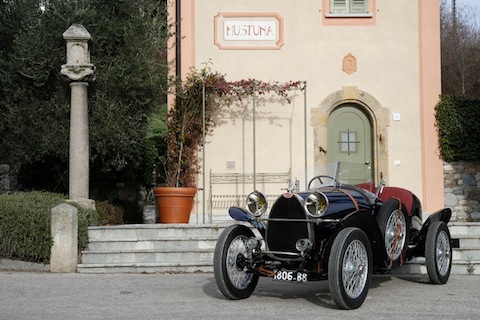
Guaranteed to exceed 110 km/h
The factory guaranteed that every Breschia Modifié was capable of speeds in excess of 110 km/h. The engine had four cylinders, an overhead camshaft, four valves per cylinder and an aluminum block. The transmission was also of an advanced design.
Many components from the Bresecia were later found in the famous T35.
Although originally intended for road use, the Brescieas Modifié were also used for racing.
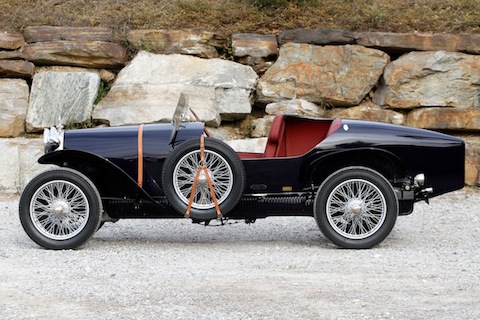
200 units produced
The Bugatti factory in Molsheim built around 200 Type Brescia Modifié in 1923, almost all of them Type 22 and 23, with a few Type 13s with a short wheelbase. Only 19 of these cars survived, half of which were converted to the short wheelbase. Most of them lost their original engine or bodywork at some point.
Original preserved
Chassis number 1709, however, retained the original engine with number 137 and the bodywork, which was dented by Lavocat et Masaud. The car was restored by the company Carrozzeria Viscardi and presents itself today in beautiful and original condition.

If you want to see for yourself, you can marvel at the car at the Swiss Classic World in Lucerne on May 24/25, 2014.
You can find out more about Swiss Classic World on the event website.


