


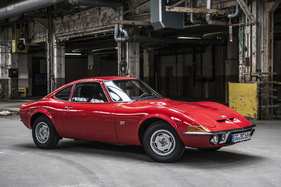

Opel is bringing its classic car stars to the start of the 8th Paul Pietsch Classic (May 24-25). The manufacturer is celebrating 120 years of automobile construction with spectators and participants and is making a big splash. The KAD models Kapitän B, Admiral B and Diplomat B as well as the coupé classics Manta A, Opel GT and Monza will be taking part in the Black Forest rally around Offenburg.

The youngest member of the Opel Classic team is a nimble Opel Corsa GSi, built in 1990, which is looking forward to a new addition to the family, as the next Corsa generation will celebrate its premiere this year. It is based on a completely new lightweight construction - the starting point for a significant increase in efficiency.

Whether with petrol and diesel engines or, for the first time, in a purely electric version. Such efficient and sporty vehicles have always appealed to the namesake of the classic car rally. "Everything was born out of a love of motorsport" was the motto of Paul Pietsch, the racing driver and publisher who died at the age of 100.
Made in Germany since 1899: Opel has been building cars for 120 years
Opel is one of the most traditional vehicle manufacturers in the world. In 1899 - four years after the death of company founder Adam Opel - Sophie Opel started automobile production on the advice of her sons Carl, Wilhelm and Friedrich. What began in a workshop in Rüsselsheim am Main with a total of 65 hand-built Opel Patent Motor Cars "System Lutzmann" became a mass phenomenon with more than 70 million vehicles built to date.
From the very beginning, Opel was committed to producing cars as efficiently as possible and thus making them affordable for a wide range of people. As early as 1924, Opel was the first German manufacturer to start particularly economical assembly line production, making the Opel 4/12 hp "Laubfrosch" and all later Opel 4 hp variants into sales hits. With the Opel P4 and the Kadett (already with a self-supporting body), the Rüsselsheim-based company was already producing genuine, technologically leading people's cars in the 1930s. Made in Germany and German engineering spirit became affordable and tangible.

Opel remained true to this democratization of mobility even in sports car construction: In 1968, the Opel GT appeared, a sinfully beautiful dream car that you could actually afford.
From the 1950s onwards, the brand took off in all vehicle classes - models such as the Opel Kadett, Rekord and Kapitän characterized the period of reconstruction and the economic miracle. This was followed by style icons such as the Opel GT, Manta and Monza. In the eighties and nineties, the Corsa, Astra and Zafira became bestsellers and symbols of German reunification. After the fall of the Berlin Wall and the founding of the plant in Eisenach, the run on the brand with the lightning bolt was particularly strong.
Between 1991 and 1998, the first generation of the Astra was built 4.2 million times - the most produced Opel model of all time! To this day, the Rüsselsheim-based manufacturer is firmly at the center of society and offers technologies in all segments that are otherwise reserved for expensive premium vehicles. Typical Opel features include the adaptive LED® Matrix light in the compact Astra (European Car of the Year 2016), the flagship Insignia and soon the new Corsa, the AGR-certified, ergonomic active seats (from Crossland X) and extensive assistance systems for added safety and comfort (all model series).
From the Olympia Rekord to the KAD models
The first completely redesigned Opel after the war was called the Olympia Rekord. With its pontoon body and chrome-plated shark's mouth, the newcomer heralded a new era in 1953. The design quotes the style of the large US limousines - just right for the incipient economic miracle. If you are successful, you want to show it again. With the Olympia Rekord Caravan, a new vehicle category also emerged - the lifestyle estate for the whole family. It continues up the ladder of success:
A completely new Opel Kapitän was launched in 1954, the Opel Rekord P2 arrived in 1960 and the Rekord A followed in 1963 - with disc brakes and shortly afterwards even as a six-cylinder model. Whether as a coupé, estate or saloon - the mid-range Rekord became the epitome of the new middle class in the still young Federal Republic of Germany. By 1965, Opel had produced 882,433 Rekord A models.
This success leaves the door wide open for the "Big Three": in 1964, the Kapitän, Admiral and Diplomat trio compete in the luxury class.

In the B generation of these so-called KAD models, the legendary De Dion rear axle ensures unique driving comfort. 1968 Opel introduces the safety steering column in all passenger car models. Innovations for increasingly dense traffic.
From Opel GT to Calibra
In June 1964, Opel is the first European manufacturer to open a modern design studio in Rüsselsheim. The Experimental GT, the first concept car from a European car manufacturer, celebrates its world premiere at the 1965 IAA.

Just three years later, the production-ready Opel GT is at the dealership - the birth of a sports car legend. Affordable for many thanks to mass production technology, the GT becomes a hit. The Rüsselsheim-based company continues to follow this pattern.

The Manta starts in 1970 and shares the technology with the Ascona - just like the Calibra from 1989 with the Vectra.
