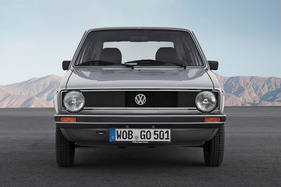
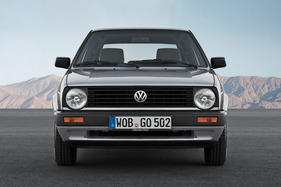
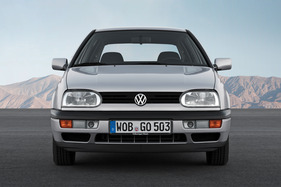
Volkswagen is celebrating it as an event of historic dimensions. The world's 30 millionth Golf rolled off the production line in Wolfsburg. Truly an impressive achievement!
This is indeed impressive, as the "predecessor" VW Beetle, the most successful vehicle in the world at the time, achieved just under 22 million in over 50 years, the Golf is now in its seventh generation and just 39 years have passed since the first Golf was built.
Each of the seven Golf generations has made history.
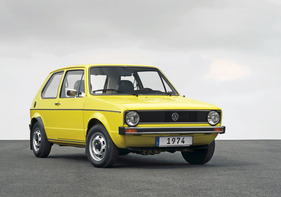
VW Golf I (1974 to 1983)
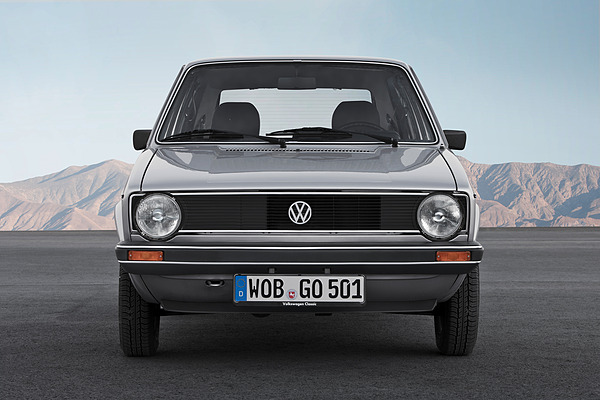
"It all began in 1974 with a revolution," outlines Klaus Bischoff, Chief Designer of the Volkswagen brand: "The move from the Beetle to the Golf was revolutionary. The switch from the air-cooled rear engine to the water-cooled front engine and from rear-wheel drive to front-wheel drive created a new vehicle layout. Thanks to the legendary design by Giorgio Giugiaro, the Volkswagen designers switched from a round to an angular design language."
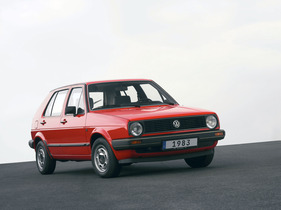
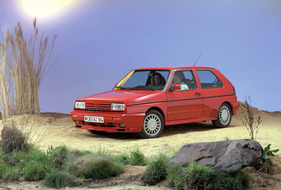
VW Golf II (1983 to 1991)
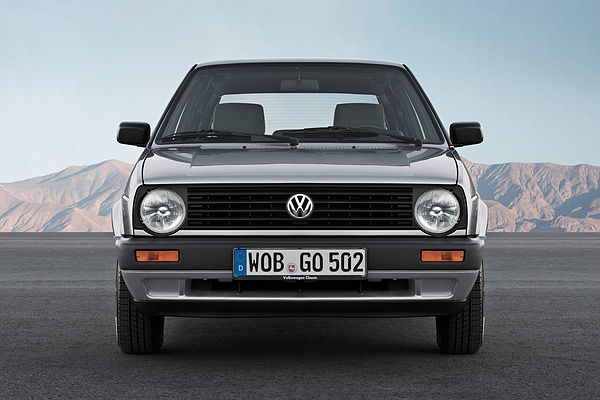
It was the Golf with which Volkswagen introduced technologies such as the regulated catalytic converter (1984), ABS (1986) and all-wheel drive (1986). In addition, the model series finally became an icon with this generation: "One of the most important moments in the history of the Golf back then was the decision of the Board of Management," says Marc Lichte, Head of Exterior Design at Volkswagen, "to further develop the design of the Golf I and to create the Golf II based on its visual DNA. That's where it all began, and that's how Volkswagen created the basis for the continuous development of the model series."
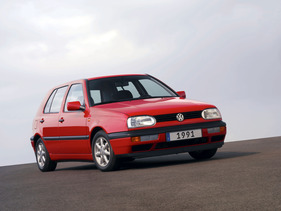
VW Golf III (1991 to 1997)
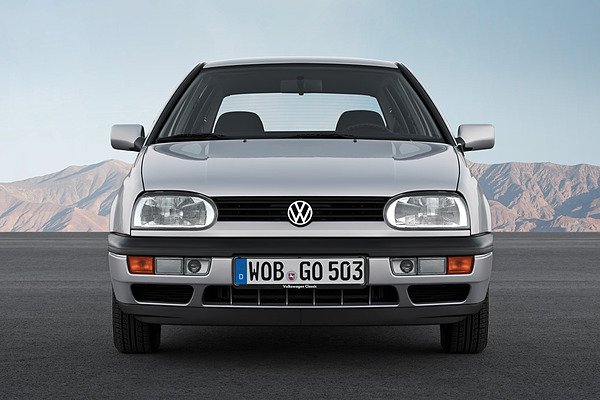
Volkswagen ushered in a new era of safety with the third generation in 1991. On the one hand, the Golf III was the first model in the series to be available with front airbags from 1992; on the other hand, however, major advances in the area of body design led to further improvements in crash characteristics. This Golf also featured the first TDI engine in the series (1993).
VW Golf IV (1997 to 2003)
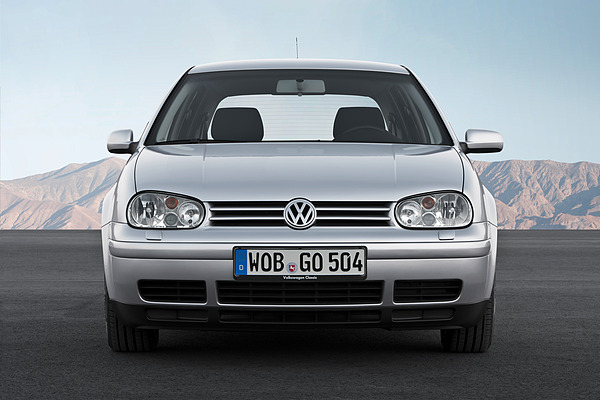
Under the direction of the then Head of Design (Group) Hartmut Warkuß, that precise design crystallized which set the course for the departure into the Volkswagen future. Today, experts regard the Golf IV as a style icon and a pioneering model for the series. However, with technologies such as the ESC (1998) and the dual-clutch gearbox (2002), this Golf was also groundbreaking in terms of design.
VW Golf V (2003 to 2008)
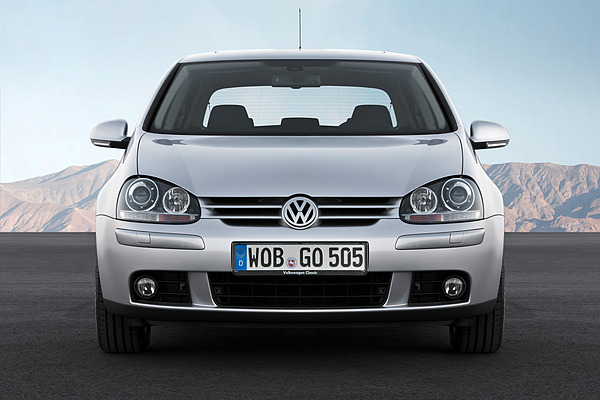
It was the Golf whose comfort, dynamics and, above all, quality left many a competitor in the upper mid-range class in its wake. One value that underpinned the stability of the laser-welded body was the 35 percent increase in torsional rigidity reported at the debut of the Golf V in 2003. The first Golf Blue¬Motion (4.5 l/100 km) was also based on the Golf V in 2007.
VW Golf VI (2008 to 2012)
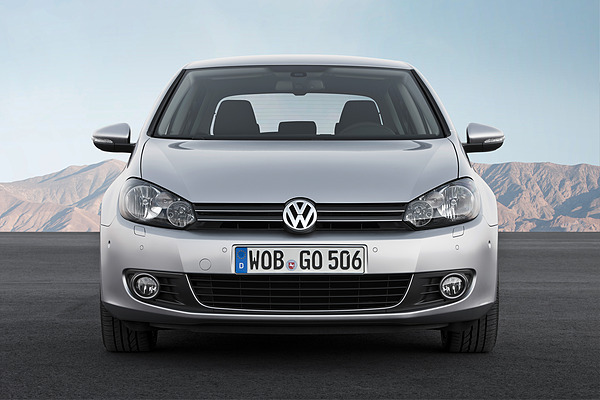
The laser-welded body was so safe that it achieved the maximum five stars in the EuroNCAP crash test with flying colors. The triumphant advance of the TSI engines (high-tech petrol engines) and the conversion of the turbodiesels (TDI) to the common rail system ensured greater dynamics and lower fuel consumption. The leader in a positive sense was the second Golf BlueMotion with an average consumption of just 3.8 l/100 km.
VW Golf VII (since 2012)
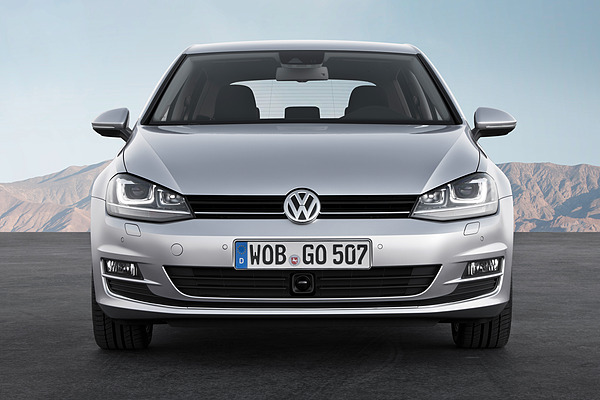
The weight of the seventh Golf was reduced by up to 100 kg, reversing the much-cited weight spiral. Depending on the engine, fuel consumption has been reduced by more than 23 percent compared to its predecessor. The leader of this movement is the Golf TDI BlueMotion, now also the 30 millionth model produced, with an average consumption of just 3.2 l/100 km. The Golf VII will certainly go down in history as the compact model in which a whole armada of new assistance systems made their debut. These are systems such as proactive occupant protection and the multi-collision brake - technologies that were previously found in the luxury rather than the compact class. And this is yet another democratization of progress.
Incidentally, the 30 millionth model is a Golf TDI BlueMotion, the most economical Golf ever built.