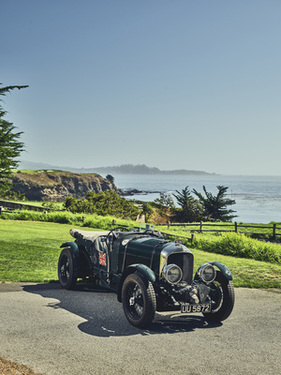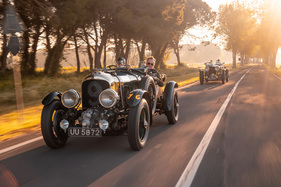
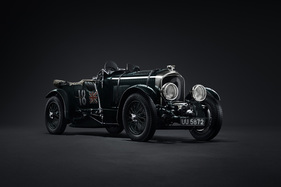
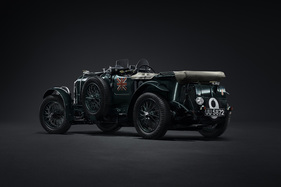
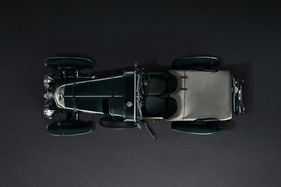
Bentley's most venerable classic car is to be restored in the form of the world's first sequel to the pre-war racing car. A specialist Mulliner team has been commissioned to use the 4½-liter factory Blower once developed by Sir Tim Birkins as a template on which to develop new cars. A total of twelve new blowers are to be recreated based on the original. Together, the new vehicles will form the world's first pre-war racing car sequel series.
Combination of time-honored craftsmanship and modern technologies
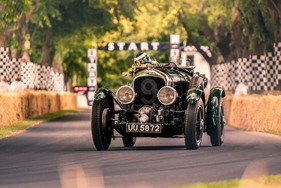
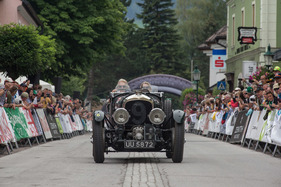
Only four original Blowers were built by Birkin for racing in the late 1920s. They were all raced on the circuits of Europe, along with the most famous car - Birkin's own No. 2 team car, registration UU 5872, which raced at Le Mans and played a central role in the 1930 Bentley Speed Six factory victory.
Now, with a combination of generations of craftsmanship and cutting-edge digital technology, the 1929 Team Blower will be the exemplar of 12 Recreations - one for each race in which the original fleet of four Team Blowers competed.
The continuation of the Bentley Blower Continuation Series was recently announced at the Salon Privé Concours d'Elegance by Adrian Hallmark, Bentley Chairman and CEO: "As we continue to commemorate 100 years of Bentley, we are combining a look to the past with the latest digital technologies and techniques to create something truly exceptional. The four Team Blowers are the most valuable Bentleys in the world, and we know there is a need for faithful racing and sports cars that can be used, enjoyed and loved without risk to the precious originals. The twelve new blowers will not only be a tribute to our heritage, but also a celebration of the outstanding skills of our Mulliner craftsmen. This is a new challenge for Bentley, but with the incredible success of the recent restoration of our 1939 One-of-One Corniche, we wanted to go one step further and create something even more extraordinary. Twelve lucky customers will soon be able to own a unique tribute to Bentley's history."
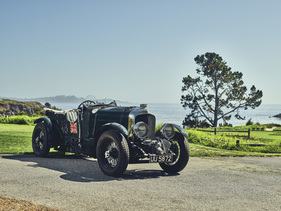
Digital 3D version of the 1929 as a template for the replicas
Bentley's own Team Blower - chassis number HB 3403 - is broken down into its individual components before each part is cataloged and meticulously 3D scanned to create a complete digital model of the entire vehicle. Using the original molds and jigs from the 1920s and a range of traditional tools, as well as the latest manufacturing technology, 12 sets of parts are then created before Bentley's experienced technicians assemble the new blowers.
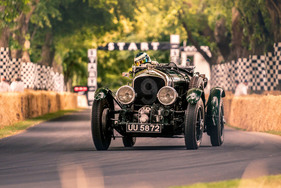
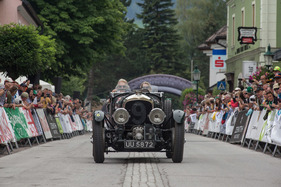
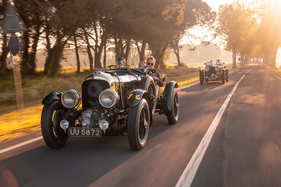
The 12 'continuations' will be identical to the original where possible - mechanically, aesthetically and in spirit - with only minimal changes hidden where possible - as the new Blower series, nostalgia or not, must conform to modern safety standards like any other car. The original car is also being reassembled, with the team taking the opportunity to carry out a detailed inspection and careful mechanical restoration if necessary. The 90-year-old car is still regularly used on the road. These include the full run of this year's Mille Miglia, daily hill climbs at the Goodwood Festival of Speed, a tour along the Californian coast with a parade at Laguna Seca and the highlight at the 2019 Pebble Beach Concours d'Elegance, where the car appeared with two other members of Team Blower and mesmerized visitors.
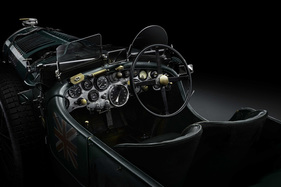
As a continuation of the original Team Blower, each of the new Continuation Series vehicles is fitted with a four-cylinder 16-valve engine, which is also equipped with an aluminum crankcase. The crankcase will again include cast iron cylinder liners and a non-removable cylinder head. The supercharger will be an exact replica of the Amherst Villiers Mk IV Roots supercharger and will help the 4398cc engine produce around 240bhp at 4,200rpm to move the Team Blower down the road. The vehicle structure consists of a pressed steel frame with semi-elliptic leaf suspension and copies of Bentley & Draper dampers. Reproductions of Bentley-Perrot 40 cm (17.75") mechanical drum brakes, as well as worm and sector steering finally complete the chassis and make for an all-round valuable automobile. It is estimated that it will take Mulliner around two years to build the car, as all the work on and in the car is carried out with the utmost precision and meticulousness. The prices of the models are available on request.
The iconic 'Team Blower'.
No other pre-war Bentley had such an impact as the supercharged 4½-liter 'Blower' Bentley. The Blower Bentley may never have won an endurance race, but it was absolutely the fastest racing car of the day. Its fans included the world-famous author Ian Fleming - the creator of James Bond. The latter later decided that James Bond would drive a supercharged 4½-liter Bentley. This name is often associated by rival British sports cars with the name "MI6 pool car".
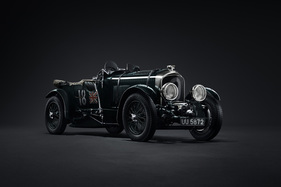
The Blower Bentleys were born from ideas by Sir Tim Birkin - notable racing driver and Bentley Boy - to add speed to the racing Bentleys of the day. While the method of W.O. Bentley's method was to increase engine power by increasing displacement - from 3-liters first to 4½-liters, then to 6½-liters - Birkin was impressed by the Roots supercharger developed by British engineer Amherst Villiers, which boosted the 4½'s power from 130 hp to 240 hp in race tune.
He persuaded Bentley chairman Woolf Barnato to approve the production of 55 supercharged 4½-liter Bentleys, five of which were exclusively for the competition. The No. 2 team car was lovingly restored in the 1960s, retaining much of its original patina. Owned by Bentley Motors since 2000, it has required little maintenance and is still as good as it was then. Since then, it has taken part in the modern Mille Miglia five times, driven to Le Mans several times and also competed at the Goodwood Festival of Speed and the Pebble Beach Concours d'Elegance.
Bentley and Mulliner - a long-standing partnership
The Mulliner name has been associated with coachbuilding since 1760, when Francis Mulliner was commissioned to build carriages for the Royal Mail. In 1870, his grandson Robert Mulliner founded London Limited, and the business flourished with the advance of mechanically powered carriages. By the early 1900s, they had opened a showroom in London's prestigious Mayfair. The 1923 Olympia Show in London saw the first collaboration between Robert's son H.J. Mulliner and Bentley - a bespoke 3½-liter. Mulliner went on to create many more Bentley bodies over the following decades, and the link between the two companies was formalized in 1959, with Mulliner becoming an official part of Bentley.
Today, the Mulliner workshop is located at the Bentley factory in Crewe, where designers and engineers, unique in their field, always carry out personal commissions for Bentley customers with the utmost professionalism. Their latest triumph is the complete replica of the 1939 Bentley Corniche - a Bentley concept car of the era, once thought lost, but reborn thanks to the extensive and varied skills of Mulliner's team of master craftsmen and artisans.