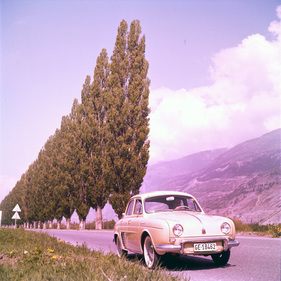
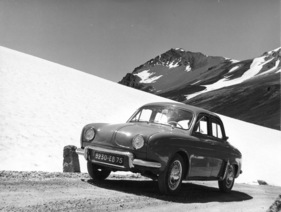
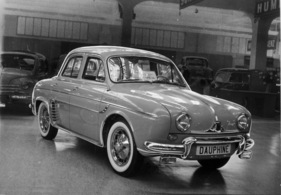

It is now a full 60 years since the Renault Dauphine was launched on the market. With the name Dauphine (heir to the throne), it was intended to emulate its predecessor, the Renault 4CV, and was a resounding success.

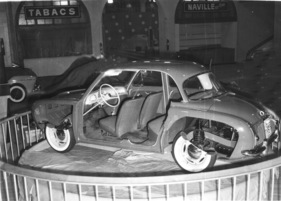
Renault's idea was to use as many parts of the 4CV as possible and build a larger car from them. Like its predecessor, the Dauphine was a four-door saloon with a water-cooled four-cylinder in-line engine in the rear. The wheel suspension was also carried over from its predecessor. New features included an automatic choke, which was then also installed in the 4CV, and the Aérostable suspension, which used particularly soft steel springs to ensure that the wheels stayed exactly where they should be.

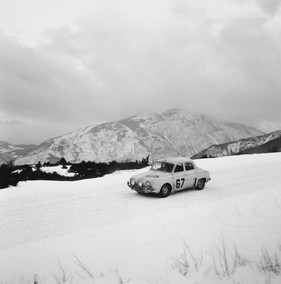
With its aerodynamic pontoon body and low weight, the Dauphine was also of interest to rally drivers. With up to 55 hp and a top speed of 115 km/h, it won the Tour de Corse, the Mille Miglia and the Monte Carlo Rally in 1958 as well as the Ivory Coast Rally in 1959.
The Dauphine was not only successful at sporting events, sales figures were high both at home and abroad. By December 1967, 2,150,738 units had been produced. When the production plant in Flins was running at full speed, a car came off the assembly line every 20 to 30 seconds.