March 7, 2019 marks the 103rd anniversary of the company's founding. During this time, a small aircraft engine factory has become the world's leading premium manufacturer of automobiles and motorcycles. This development reflects the character of the company and the people who have played a key role in its success. It is based on the courage to try new things, the willingness to go beyond what is necessary, the desire to compete with the best and the ability to master special challenges.
In 2019, BMW Group Classic can look back on numerous events, top performances and innovations based on precisely these principles.
100 years ago: A high-altitude flight as the first best performance for BMW
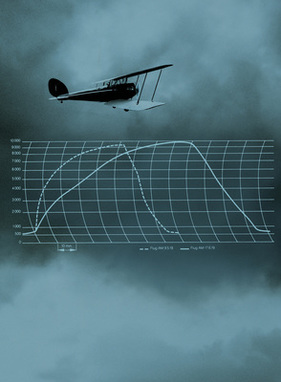
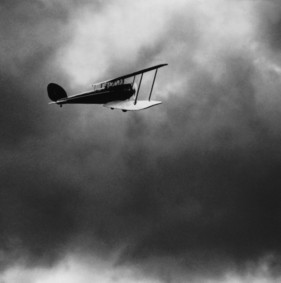
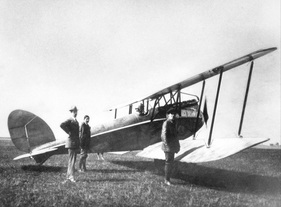
On June 17, 1919, it was the experienced test pilot Franz Zeno Diemer who was determined to help the young BMW company achieve its first world record. He took off from Munich's Oberwiesenfeld in his aircraft powered by the BMW IV aircraft engine from Deutsche Flugzeugwerke for a sensational record attempt. The 230 hp engine had been specially designed for use at high altitudes.
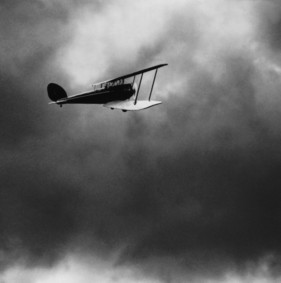
It took Diemer around one and a half hours, braving temperatures of up to minus 50 degrees in his open cockpit and the constantly falling oxygen content in the air he breathed. Then his plane, which also overcame these adversities, had reached an altitude of 9,760 meters. Never before had an airplane climbed so high.
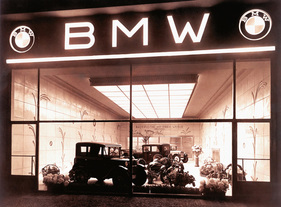
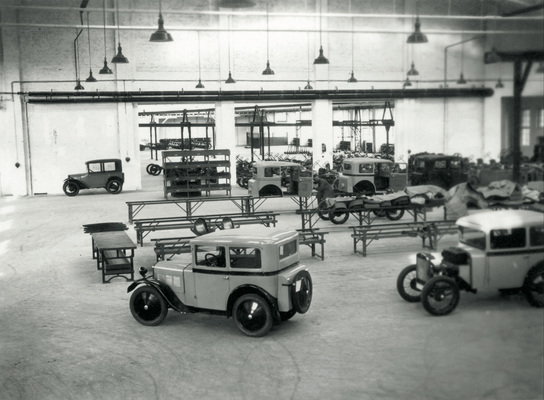
90 years ago: The BMW 3/15 PS - a start on four wheels
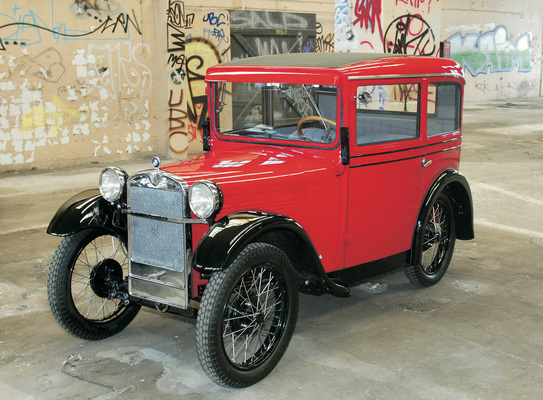
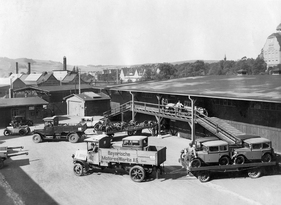
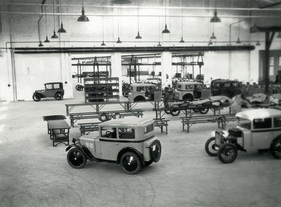
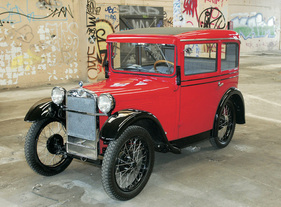
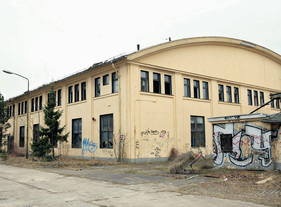
Ten years later, BMW had already expanded its product portfolio to include motorcycles - now the next step followed. The Board of Management under the leadership of Franz-Josef Popp, who had already held leading positions in the company since the early phase of aircraft engine production, decided to enter the automobile business. "Our experience in the field of motorcycle construction prompted us to take up the production of small cars, for which there appeared to be a promising domestic market. We have acquired the Eisenach vehicle factory for this purpose," Popp noted in the company's annual report. On March 22, 1929, the first BMW 3/15 PS left the factory halls in Berlin-Johannisthal. Almost 16,000 units of the new small car followed until 1932.
60 years ago: Debut for the classic Mini
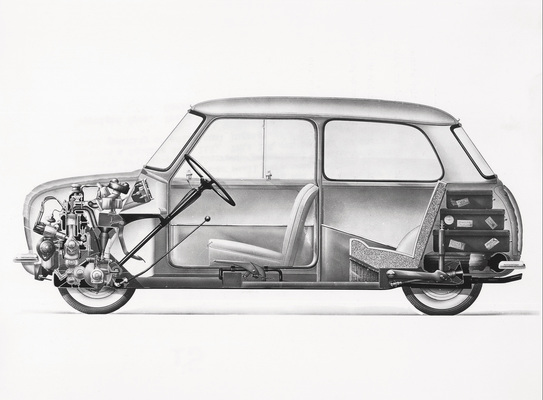
He sketched the first designs on a napkin, and with the resulting plans, designer Alec Issigonis created a revolutionary small car. On April 4, 1959, the first classic Mini rolled off the production line at the Austin Longbridge plant in Birmingham, UK. Despite an exterior length of just 3.05 meters, it offered enough space for four occupants and their luggage. With front-wheel drive, a four-cylinder engine mounted transversely at the front and a gearbox underneath, Issigonis had developed a completely new design that was soon adapted by almost all manufacturers. It offered the best conditions for the principle of creative use of space and for thrillingly agile handling - features that still characterize models from the British premium brand today.
60 years ago: The compact BMW 700 marks a turning point
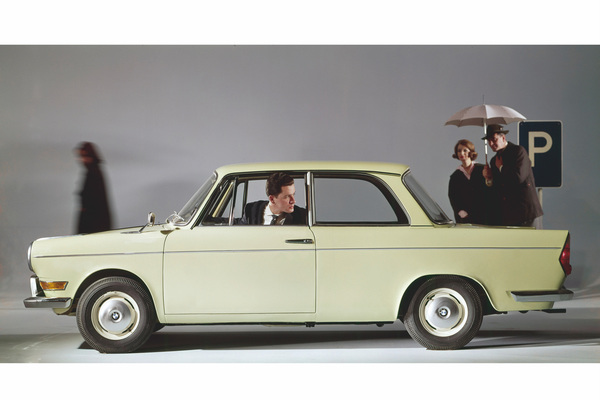
With the BMW Isetta and the BMW 600 derived from it, the company made significant contributions to mobilization in the young Federal Republic of Germany in the 1950s. However, customer demands increased and a new, conventionally designed small car was needed to compensate for the drop in sales. The decisive impetus came from the Viennese BMW importer, car designer and former racing driver Wolfgang Denzel. He presented the BMW Board of Management with a design for a two-door hatchback created by Italian designer Giovanni Michelotti. The prototype became the basis for the BMW 700, which was presented for the first time on June 9, 1959. With more than 190,000 units sold by 1965, BMW was able to emerge from the economic trough.
60 years ago: Small shareholders preserve the independence of BMW
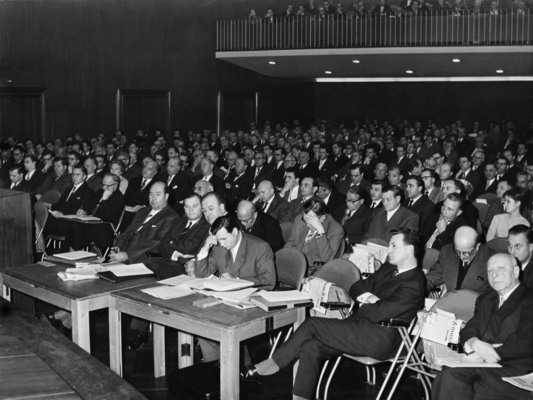
Sales problems in the automobile and motorcycle business had caused serious financial difficulties for BMW in the 1950s. At the Annual General Meeting on December 9, 1959, the takeover of the company by Daimler-Benz AG was therefore on the agenda. However, the associated restructuring plan met with resistance from numerous small shareholders. In the course of a turbulent discussion, the lawyer Friedrich Mathern succeeded in pointing out inconsistencies in the official figures. He criticized the fact that the development costs for the BMW 700 were unnecessarily included in full in the balance sheet for 1958. He also criticized the fact that the value of the BMW brand and its workforce had been set far too low in the restructuring concept. As a result, the meeting was adjourned - with the consequence that the temporary offer from Stuttgart no longer came into effect. BMW remained independent, but the financial hardship had not been eliminated. Only the increased commitment of major shareholder Herbert Quandt, who presented a new restructuring plan the following year and also took the interests of small investors into account, provided confidence.
50 years ago: A new era of motorcycle production begins
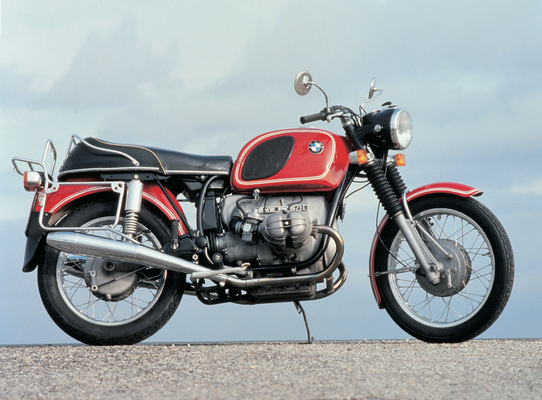
Aircraft engines had been built in Berlin Spandau under the direction of BMW since the 1930s, and after the war motorcycle and automobile parts were manufactured. In 1969, the entire production of motorcycles was finally relocated from Munich to Berlin. The move marked the start of production of the BMW /5 series, which the then Technical Director, Helmut Werner Bönsch, presented with self-confidence: "There is no doubt that BMW has built the best and most advanced motorcycle in the world for many years. We have the ambition to maintain this reputation in the future." And indeed, the BMW R 50/5, BMW R 60/5 and BMW R 75/5 models, conceived as sporty tourers with a modern design, had a completely new chassis with a telescopic fork for the front wheel and adjustable rear wheel suspension. The engine was also newly developed, although it was still a proven two-cylinder boxer. A novelty was that the customer could choose between different color variants for the first time.
40 years ago: The BMW M1 starts in the Procar series
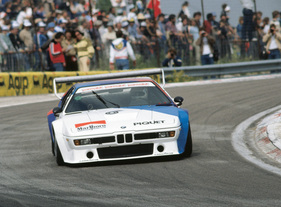
The BMW M1 mid-engined sports car was irresistible even when stationary. But it developed its true fascination on the race track. This was particularly effective in the Procar series initiated by the then Managing Director of BMW Motorsport GmbH, Jochen Neerpasch. The races were held in 1979 and 1980 as part of the Formula 1 World Championship races in Europe and became a great success with the public. Neerpasch's idea of having Formula 1 drivers and touring car drivers compete against each other in technically identical vehicles, each with 470 hp, was also very well received by the active drivers. The first race in the Procar series was held in Zolder, Belgium, on May 12, 1979, with 16 more to follow.
20 years ago: World premiere for the BMW X5
An all-wheel-drive all-rounder that could impress not only on unpaved terrain, but also on the road with excellent driving characteristics. This is how the BMW X5, the world's first Sports Activity Vehicle, presented itself in the fall of 1999. A few months later, the BMW X5 Le Mans, an experimental vehicle with a more than 700 hp V12 engine, showed just how great its driving dynamics potential really was. Racing driver Hans-Joachim Stuck achieved a top speed of 309 km/h with it on the Nürburgring. 20 years after the debut of the first SAV, the family of BMW X models has grown to seven model series. In 2018, BMW X models accounted for 37.3 percent of the brand's total sales.
20 years ago: The BMW Z8 fascinates with classic aesthetics
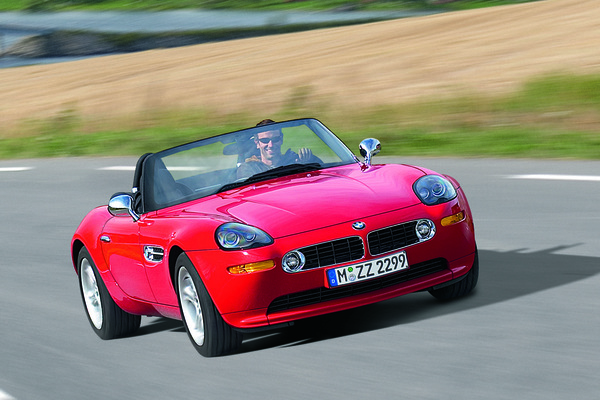
In 1999, BMW also presented a milestone in its roadster history, which is not short of highlights. The BMW Z8, created by Danish designer Henrik Fisker, caused a sensation at its world premiere at the IAA in Frankfurt. With lines reminiscent of the legendary BMW 507 and a luxurious cockpit, it still attracts attention today. Innovative technology found its place beneath the classic forms: a self-supporting aluminum frame with a bolted-on outer skin and a 400 hp V8 engine. Between 2000 and 2003, a total of 5,703 examples of the BMW Z8 were produced in a dedicated factory at the BMW plant in Munich.
BMW Group Classic will be looking back on these anniversaries in detail and in loose succession at events and publications throughout 2019.