"I always loved playing with it as a child". That's how people react when they hear about a visit to the Unimog Museum. And it's not just worth a visit for technology enthusiasts, but for the whole family. So let's make our way to Gaggenau, in the scenic northern Black Forest, to an inviting museum building and its grounds.

"The museum has been in existence since 2006 and around forty thousand visitors come here every year," says museum employee Sarah Kraft. She adds: "The museum is run by a non-profit association. Around 150 volunteers take care of guided tours, but also repair our vehicles".
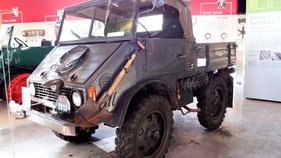
Which brings us to the main character of this report: The Unimog, which its fans also like to affectionately call "Moggi". Unimog actually means "universal motor vehicle". Sounds like officialese, but it gets to the heart of the matter.
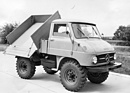
A popular online source defines it as an "all-wheel drive small truck and implement carrier". In other words: a commercial vehicle, but not a tractor with large rear wheels, not a jeep and certainly not a fashionable SUV for the city center. Rather a workhorse that can do everything - a kind of jack-of-all-trades. And visitors to the museum can get a comprehensive picture of this.

Birth of the Wollmilchsau
The Unimog ultimately owes its existence to contemporary history, more precisely to the "Morgenthau Plan". This plan, named after the then US Secretary of the Treasury, envisaged transforming Germany into an agricultural country after the Second World War. Today we know that this never became reality. But even before the end of the war, the then head of aircraft engine development at Daimler-Benz, Albert Friedrich, realized that a new field of activity was needed. This gave rise to the idea of an agricultural motor vehicle, which then took shape from 1945 as a "front mower" with the approval of the American military authorities.
After a development group had developed the concept of the Unimog to series maturity, production of the vehicle began in 1948, initially at the Boehringer company in Göppingen. These early, dark green painted original Unimogs were equipped with a 25 hp diesel engine and can be recognized by the logo with the ox's head. However, demand soon exceeded production capacity. So the Unimog ended up at Daimler-Benz in Gaggenau.

Versatile in use
From 1951 to 2002, over 320,000 Unimogs were produced at this site, which is why the vehicle and the town are closely linked. On a tour of the almost 1400 square meter exhibition area, visitors quickly realize why the vehicle was such a great success. This is because it shows how versatile the "machine" has been used over seven decades and how it has been continuously developed. A particularly positive aspect is that not only is the fascinating technology explained, but the respective connection to working life, the region and the historical context is also skillfully illustrated.

A child's dream
It seems to the author that children are particularly fascinated by this ability - see the opening remark!
And young visitors get their money's worth in Gaggenau, as the Unimog Museum sees itself as a family-friendly excursion destination to experience and discover. It has special offers and a large children's igloo with lots of fun.
And action!

Enough of the theory, let's move on to the 4000 square meter outdoor area, the Unimog course. Although there is a charge for this, it is a highlight of the visit and an absolute must!
Up to 5 people at a time are taken on the circuit. "Our drivers also work here on a voluntary basis," Ms. Kraft remarked. A sign advises people with certain health problems not to take the ride - it can be exciting. But don't worry: the friendly and careful driver makes sure that nothing happens. The spectacular ride in this exceptional vehicle lasts around eight minutes. A real adventure that would amaze the driver of a normal car: over two tree trunks, through water, up and down stairs, extreme inclines of up to 42 degrees - no problem at all! The "Moggi" does not tip over. It doesn't sink and overcomes all obstacles. It makes you want to take the wheel yourself. This is also possible, but you have to complete a driver training course first. Not a bad idea, is it? ....
Further information (including admission prices, opening times, driver training) can be found on the museum 's website .
This article was published on 03.10.2013 in the Aachener Zeitung/Aachener Nachrichten.