License plate G - Volkswagen and the spiral loader





You have only
1 out of 21
images seen in high resolution



Summary
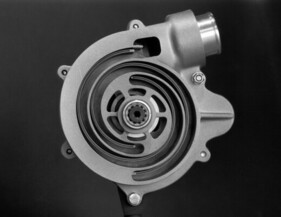
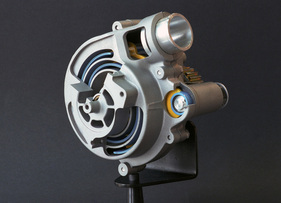
Almost forty years ago, Volkswagen tried to make its cars faster and more economical with the G-Lader. The experiment only lasted one model generation, but today the OGs from Wolfsburg - the "original G-Laders" - are sought-after rarities. This article tells the story of the development of the VW spiral supercharger.
This article contains the following chapters
- Bargaining for every mark
- Old technology rethought
- On to something new
- Small but mighty: the G40 engine
- Off-G-charging
Estimated reading time: 8min
Preview (beginning of the article)
Volkswagen at the beginning of the 1980s - these were engines that had just left the boxer principle behind, but whose displacement and power were limited: four cylinders, 1.8 liters of displacement and a maximum of 112 hp. Wolfsburg did not offer more for money or good words. Only the five-cylinder engine, which had been further developed from the four-cylinder, provided some steam for the Audi subsidiary, but it was too big to be installed in the newly designed Scirocco, Golf and Polo models. Volkswagen switched to multi-valve technology with the Golf GTI 16V in 1986. Volkswagen was determined to use cylinder heads with four instead of two valves per cylinder in the entire model range and thus keep the top models Golf GTI, Scirocco GTX and Passat 2.0 competitive. The 139 hp in the Golf without emission control was a decent result. Only the controlling department was not satisfied, as the production of the four-valve cylinder heads was expensive and required constant reworking. In addition, the power output was limited, as the 1.8-liter basic engine could hardly produce more than 150 hp, even with four-valve technology. The expensive technology did not appear to be worthwhile for models with a displacement of less than 1.8 liters, which is why VW decided not to use it here.
Continue reading this article for free?
Images of this article