The idea was born during a wet and cheerful Nürburgring evening in 1993 in the "Pistenklause" during the 24-hour race. Erich Zakowski, Paul Rosche and I talk about the old days. "You should really do something with the old guard again," says the legendary Zakspeed senior boss to the BMW engine pope, "preferably on the Nordschleife, that's a good place for something like that." And then things really get going. "What do you think Heyer is still capable of," enthuses the old Zak about his former number 1 driver. Rosche also throws names into the discussion, "our Hubert Hahne, he can still do it too."
We continue the discussion well into the night and give the oldie idea that has just been born its first outlines. "It should be two cars with four drivers each," says Rosche, "with plenty of power and our old Formula 1 and Formula 2 mechanics." Then, after another round of Pilsner, Rosche turns to me: "And you sell it to our Head of Sport Karsten Engel next week and take care of the realization. You'll get a ride in return." I don't need to be told twice.
Mr. Engel is immediately enthusiastic and decides after internal consultation: "We'll do it". So the planning and countdown begins in Munich and at my place for an adventure that is given the internal project name "BMW Dream Team".
The tasks are clearly assigned: Paul Rosche builds the cars, Karsten Engel finds the sponsors and I recruit the drivers. The only requirement from Munich: "Poldi has to be there." Poldi is Leopold Prince of Bavaria, but his appointment violates the self-imposed rules because he is still an active BMW contract driver in the STW championship. A minimum age of 50 and a break of at least three years after the last official race entry are the basis for a ticket in the BMW Dream Team. Engel is of the opinion that "we could certainly do with a professional like Poldi." Incidentally, the minimum age also applies to all other team members in a managerial role.

Rosche is of the opinion "that the old guys need a lot of horsepower so that they can drive comfortably" and has donated powerful six-cylinder engines with 350 hp for two newly built BMW M3 GTRs. Top speeds of around 260 and 270 - what a blast.
Star parade in the pits
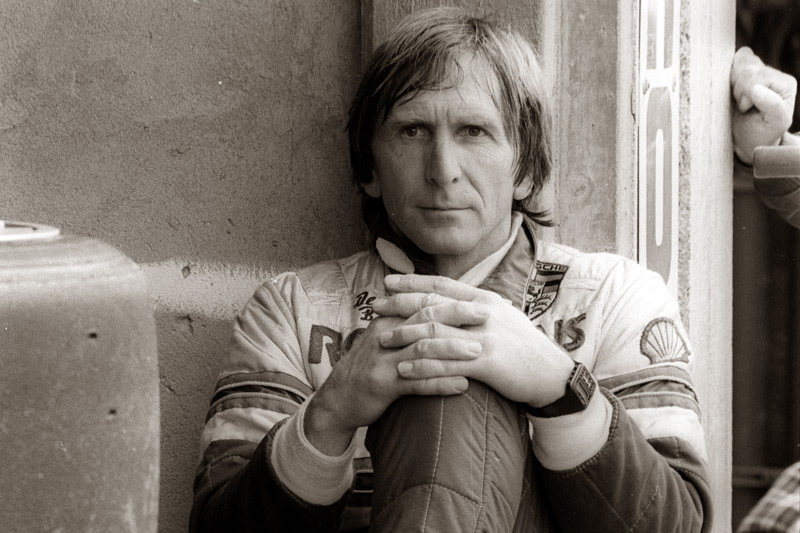
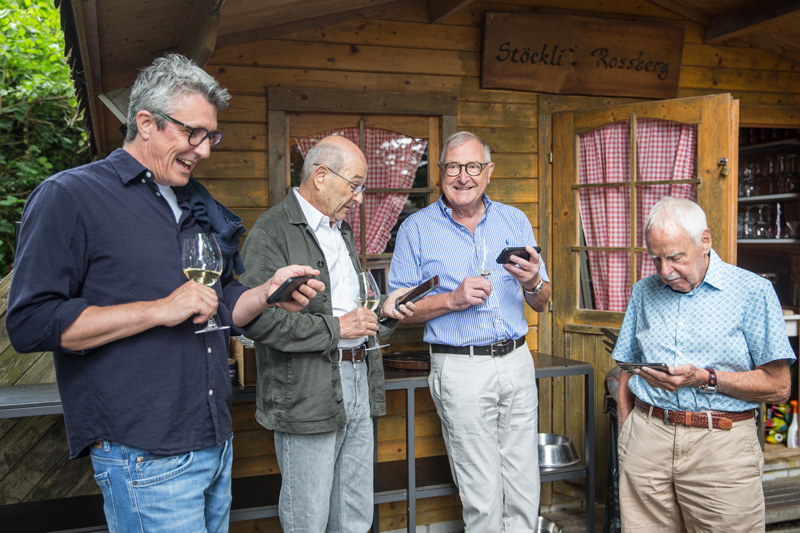
After a few meetings in Munich and a lot of phone calls, I was able to announce at the beginning of 1994 that the dream team was complete. Hans Heyer (50), Poldi (50), Heiner Weiss (51) and I (53) form one team, Hubert Hahne (58), Jochen Neerpasch (55), Gerd Schüler (52) and ZDF man Karl Senne (59) the other. Team bosses are Paul Rosche (60) and team manager Erich Zakowski (60), chief timekeeper ex-Porsche race director Peter Falk (61) and BMW marketing boss Karl-Heinz Kalbfell (55). Racing legend Hans Herrmann (65) and former Opel Sports Director Helle Bein (61) are in charge of driver support, BMW man Karl Klee (55) is in charge of organization, Richard Stolz (50) is media manager. Retired Dunlop racing service manager Gerhard Weber (60) ensures the right choice of tires and CNC boss Bernd Fischer sets up his gourmet temple, famous from the DTM.

Not forgetting BMW doctor Vincenzo Tota, whose physiotherapists are supposed to take care of exhausted chauffeurs and their pinched spinal discs. Of course, there are also some naysayers, one of whom cheekily asks whether we have "enough double hearts and a geriatric nurse" with us. And in many a preview of the event, the headline reads: "Dream or nightmare"?

BMW schedules three days of testing on the Nordschleife in the second week of May. At the same time, all drivers have to undergo an extensive fitness and condition check at Doc Tota. The green light is given, everyone is fit. Despite the bad weather, the test runs without incident and everyone gets enough time to drive. While one M3 is being loaded, the second has to be driven to the Wehrseifen section for a photo shoot. Because I have a mishap on the way there with contact with the crash barrier, we position the car so that the dented side, including the tilted front axle, is not visible. I'm ordered to make a donation to the mechanic's coffers.
Prince Poldi's showpiece
Friday, June 3, official qualifying. Everyone envies us for the beautiful cars. Poldi and Heyer in number 6 are the absolute fastest. Row 2, grid position 4. Hahne is clearly the strongest in 7, row 6, grid position 12. Poldi is the starting driver - and flies into the guardrail on the very first lap while attacking the lead. Wheel carrier bent, pit stop, 5 minutes away. The weather changes, it storms and rains terribly, one car after the other retires. Heyer starts a gigantic race to catch up into the night and takes the lead before midnight. He hands over to Poldi with a lead of just under two laps. We're actually on course for victory, us old gray sacks.

Then comes the shock: shortly after one o'clock, the only professional in the team fires the M 3 with start number 6 off the track behind the Swedish intersection without needing to. On impact with the crash barrier, the car is thrown back and scrapes headfirst past the front end of the BMW 318i driven by Jockel Winkelhock. Jockel is aghast: "The guy actually ripped my windshield wiper off with the roof." The prince is rescued from the badly demolished M 3 with a broken hand and bruises. His gold Rolex flew off his arm on impact - and never came back. That still hurts him today more than anything else. We are furious that the unique opportunity to win the 24-hour race as the "Gray Wolves" was so easily wasted. In a personal letter to his comrades-in-arms, Poldi later spoke out again in an attempt at clarification.
For the sake of completeness, it should also be noted that our second M 3 with Karl Senne at the wheel also sails off the track three hours before the end of the race. Class victory and eighth place in the overall standings are gone, leaving the Dream Team empty-handed and with two wrecked cars. Our "Chef de Mission" Paul Rosche concludes the disaster with a wheat beer and a defiant reaction: "We can't leave it like this, we'll be back." And with a sideways glance at Hubert Hahne: "But without the black man, please"
The "black man" needs an explanation. Since the first qualifying session, Hubert Hahne has been followed at every turn by a man dressed in black with an umbrella and bowler hat. The suspicious apparition follows the ex-Rhinelander, who now lives in Italy, like a shadow. Wherever he is, his shadow is already there. He even stands next to him when he takes a leak. Irritated, Paul Rosche wants to know from his press officer Friedbert Holz what this circus act is all about. Fellow reporter Burkhard Bechtel provides the explanation with a subtle grin: "According to old Rhenish custom, the 'black man' is used by creditors as a final psychological measure against stubborn defaulters. He doesn't speak to the debtor, but constantly hands over the client's business cards." In this case, it is about a stubborn outstanding item that WIGE boss Peter Geishecker reminds us of in this way. Since Hahne's persistent weekend pursuer is equipped with an organization ticket, he can follow his "victim" to the last corner of the race track. "If we don't get our money," says Geishecker with a twinkle in his eye, "at least we don't want to be denied this fun."
The second attempt
In February 1995, a new BMW invitation arrives. This time we drive a smaller car, two 320s from the STW championship are ready for us. Just under 300 hp, 4-cylinder engine, sequential gearbox. Neerpasch, Senne and Poldi have withdrawn for various reasons and will be replaced by all-rounder Klaus Fritzinger (58), rally professor Rauno Aaltonen (57) and Porsche test engineer Günther Steckkönig (59). Otherwise, the line-up is the same as last year. I'll be driving with my old friend Heyer again. As a warm-up, we'll have a quick start in a 500 km endurance cup race on the Nordschleife three weeks beforehand. Both cars drove to a one-two victory in the 2-liter class without a scratch.
On the third weekend in June, we want to redeem ourselves for last year's disgrace. It starts well, Heyer puts starting number 4 back on the second row. Our showpiece oldie is only one second slower than Jockel Winkelhock. The Swabian is still smarting from last year's experience with Poldi and begs Heyer: "Please don't do it again." Meanwhile, Rosche marches up to his press officer Holz with the starting grid in his hand and grumbles: "Why do we have to pay expensive drivers when an old bastard like Heyer is just as fast?" Laughter in the BMW press tent. Our second 320i with the number 3 is on row four, so both cars are in the top ten.

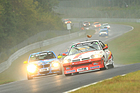
Nothing new from the weather, of course it's pouring with rain again. Nevertheless, our cars remain within striking distance of the leading Schnitzer-BMW with Ravaglia, Winkelhock & Co. At least we drive faster than our brand colleague Nelson Piquet, who doesn't like the wet track at all. Our team boss proudly shows the times around. Paul Rosche stops laughing around midnight when the rally finned his car off-road at the Schwedenkreuz. He reports on the radio: "I've run out of light, what should I do?" Rosche replies: "Then just drive on without them." Aaltonen again: "But the front is all crooked." Rosche: "Never mind, come here and we'll straighten it out."
Luki Scheuer's lecture
After a 20-minute lap, the damaged car rumbles into the pits. The mechanics hammer, glue and fix it. Then the 3 rolls again. The Heyer car also has problems, an oil leak has to be sealed. In the morning, petrol fumes rise into the interior and I can only drive with the window open. I feel sick, my head is buzzing, the contours of the road are blurred. I radio for a replacement. Heyer takes over, but not for long. His engine flies apart on the straight. And half an hour later, the double retirement is complete: Hubert Hahne crashes into the wall on the Breidscheid bridge. "The brake disk burst," he says.
At around 12 noon, Paul Rosche gathers the visibly depressed team. "Gentlemen," he says with a hint of disappointment, "the BMW Dream Team adventure is now over. There won't be a repeat. We have proven that the old guys can still do it. The only thing missing was the luck for a tangible result. Thanks to everyone who took part." Then he turns to his men: "Pack up, load up, move off."
On the way to the parking lot, I am met by Nürburgring cult figure Luki Scheuer. "You're all out of your minds," he rumbles, "how can you get involved in such a crazy idea. You should have learned your lesson last year." Luki already took a critical look at the issue with a sharp pen in the Rhein Zeitung in 1994 after Poldi's crash and asked the question at the end: "Did this nightmare really have to happen?"
I think so. Because otherwise we might never have had the chance to compete against the younger generation on the mother of all racetracks in our old age. With fantastic cars whose technology and driving experience we enjoyed every second of. Despite the lack of results and various crash landings, the "BMW Dream Team" undertaking is a wonderful farewell to the Nordschleife for all of us. We have no regrets.

Thank you BMW. Thank you Paul Rosche.
This story comes from the first volume of the successful book series "Hallo Fahrerlager" by Rainer Braun. Further information can be found on the series website www.hallo-fahrerlager.de .