SEFAC Grand Prix - little success despite (a little) state support


You have only
6 out of 40
images seen in high resolution
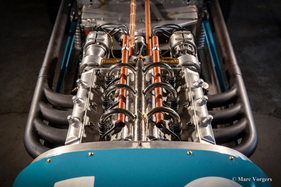
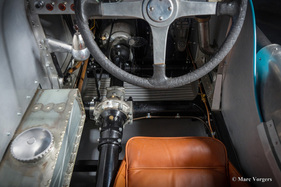
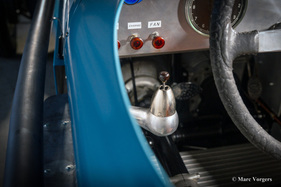
Summary
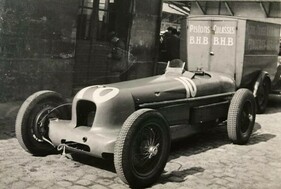
In the 1930s, French enthusiasts wanted to counter the almost overwhelming superiority of the Germans and Italians in motorsport. They founded a racing team and built a Grand Prix car. However, despite its advanced design, it was not very competitive. Even state aid did not help. This report tells the story of the 1934 SEFAC Grand Prix and shows it in current and historical footage.
This article contains the following chapters
- No racing successes, no chance against the competition
- Built with very little state aid
- Conventional layout, revolutionary U-engine
- Classic chassis and running gear
- A failure in almost every respect
- What happened afterwards
- Epilogue
- Why a U-engine?
Estimated reading time: 8min
Preview (beginning of the article)
SEFAC - isn't that the abbreviation for the Ferrari company (Società Esercizio Fabbriche Automobili e Corse)? No - or rather: not only. In 1934, this was a French Grand Prix car! At the beginning of the 1930s, the French Grand Prix monoposti were increasingly falling behind their Italian and German rivals. Alfa Romeo, Mercedes-Benz and Auto Union (and soon only the latter two) dominated the big races at will. This challenged French patriotism - and because they couldn't find any racing cars for sale (Bugatti reserved a Type 59 for its own drivers), a group of wealthy enthusiasts decided to found the "Société d'Etude et de fabrication d'Automobile de Course" (SEFAC) in 1934. The group included racing driver Raymond Sommer as well as André Parant, Raymond Brault and engineer Emile Petit. The latter was no stranger. Quite the opposite: he had worked successfully for Salmson and after the war at the CTA Arsenal, which unfortunately was also a failure.
Continue reading this article for free?
Images of this article