For once, it's not two or four bars in many cylinders that are the theme of the current special exhibition at Pantheon Basel in Muttenz, but there is a buzz in the air, at least in the minds of visitors to the exhibition, as it revolves around the electric car. And is therefore called "Under power".

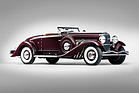
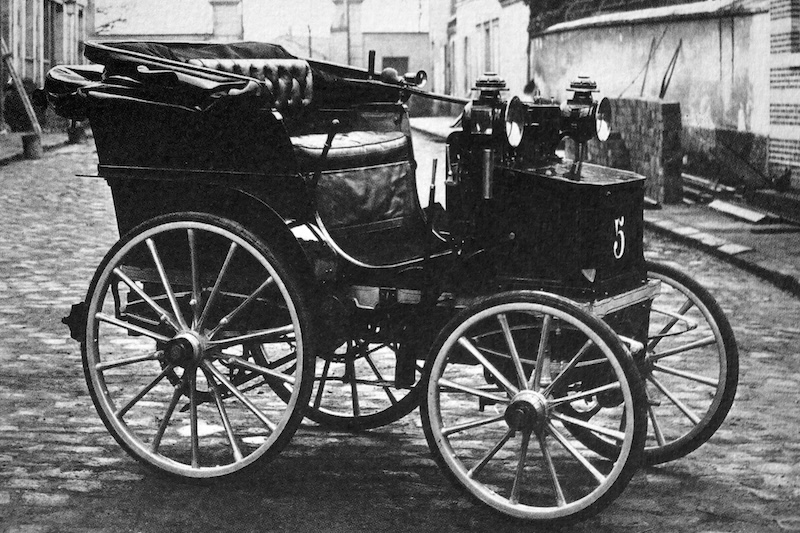
From April 23, 2018 to October 21, 2018, electric vehicles from over 100 years ago can be admired in the uppermost part of the Pantheon's spiral corridor, plus two early examples on the first floor.

When electric cars were still faster
It was in 1899 that Camille Jenatzy, a racing driver and engineer, exceeded the almost unbelievable speed of 100 km/h with an electric car, reaching 105.8 km/h with his "Jamais Contente". 34 hp and an aerodynamic design were enough to reach this speed. The record stood for three years until a steam-powered car was even faster.

A replica of the "Jamais Contente" is a good introduction to electromobility in the Pantheon.
Electric cars were much more popular and successful at the beginning of the 20th century, mainly due to their ease of use.

Early petrol cars required a skilled hand, were difficult to start and prone to breakdowns. In comparison, even the 1904 Alfred Dinin on display (bought by a Swiss doctor at the time) stood out for its simplicity and ease of use.
Swiss specialties
The Lucerne Museum of Transport and the Pantheon Basel, which are working together for the special show, are aware that the idea of presenting electric cars is not entirely new. In fact, there is also an exhibition on electromobility at the PS-Speicher at the same time, which even bears the same name.
In Muttenz, south of Basel in Switzerland, you will therefore find many Swiss specialties, such as several vehicles from the Tribelhorn company, which can be considered one of the Swiss pioneers.

If you take a look at the Tribelhorn passenger car from 1908, for example, you will be amazed that it was not only possible to build a pretty convertible back then, but also a practical electric car with a range of 80 kilometers. The fact that it was only 20 km/h fast was probably no great disadvantage at the time, given the road conditions and the difficulties drivers had to contend with on the roads.

Tribelhorn was successful as long as electric cars were able to hold their own against gasoline-powered automobiles.
Not just cars
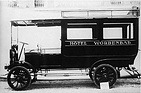
A large part of the special show is not dedicated to conventional cars, but to other means of transportation, from bicycles and scooters to trucks and tractors. In these vehicle categories in particular, the electric motor still had an advantage in those years when petrol engines had significantly more power and were good for longer ranges. Just think of applications in buildings or on factory premises.

It is also interesting to see how primitive some electric bikes still looked 20 years ago. In fact, the early e-bikes have already become youngtimers.
Into the modern age
Of course, an electromobility exhibition cannot do without modernity, too much has happened in the last ten years. So there are also two Chevrolet Volts (one as a cutaway model), a Toyota Prius and a Tesla Roadster in the Pantheon.

But the Swiss also had a say in the development of innovative solutions in the modern era, as shown by the Horlacher Ei, the Peraves E-Tracer and the Volkswagen Sharan Hybrid research car.

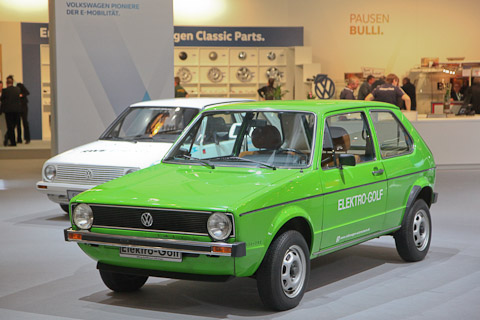
What is missing a little in Muttenz are the electric cars of the 1950s to 1980s. The idea of silent and clean propulsion never really died out, but the inventors lacked powerful batteries. However, electric versions of the Renault Dauphine, VW Golf and BMW 3-series, for example, were created time and again.

A Swiss Larag, basically an electrified Fiat Panda from the 1980s, can be seen in the Pantheon as a representative of all these attempts.

The Sinclair C5, which could also be seen on Swiss roads, is also on display. Even the sheet metal artists at Zagato worked on electric city cars in the 1970s, creating the Zele Electro Zagato.
Not just vehicles
Anyone visiting the highly recommended exhibition in the Pantheon should take enough time to look at the electrical engineering components - batteries, motors, drives, circuits. This is where the real progress of the last 20 years becomes clear.

The various research and competition vehicles, thanks to which the technology has certainly been noticeably advanced, are also interesting.

After all, the Spirit of Bienne was already traveling at 160 km/h as a solar car 25 years ago!
Educational brochure
As always, the attractively designed brochure accompanying the exhibition is also highly recommended. It contains many facts and background information that you wouldn't notice or think of just by looking at the vehicles in the exhibition. For example, it tells you about an early e-bike that was mass-produced as early as 1897 and must have made riding a tandem much easier for two men. The brochure (ISBN 978-3-906298-07-8) can be purchased in the exhibition store.

Further information on the exhibition and opening times can be found on the Pantheon Basel website.