Enzmann 500 - two strokes and lightweight construction


You have only
2 out of 15
images seen in high resolution


Summary
Until 1960, Enzmann sports cars had to do without doors in favor of stability and to the disadvantage of less sporty semesters. The Enzmann 500 was intended to prove that a plastic body was also suitable for platforms other than the VW Beetle, which formed the basis for the better-known Enzmann 506. This report provides an overview of all existing facts and assumptions and shows the vehicle in many previously unpublished pictures
This article contains the following chapters
- Italian grace from central Switzerland
- Typical Enzmann inside
- Powerful technical basis
- A prototype
- Whereabouts and history unknown
- Technical data
Estimated reading time: 3min
Preview (beginning of the article)
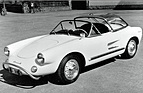
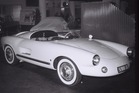
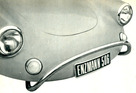
Until 1960, Enzmann sports cars had to do without doors in favor of stability and to the disadvantage of less sporty semesters. The Enzmann 500 was intended to prove that a plastic body was also suitable for platforms other than the VW Beetle, which formed the basis for the better-known Enzmann 506. With the Enzmann 500, Emil Enzmann created an automobile that could certainly compete visually with more famous creations from Italy. Due to the need to accommodate and cool a front engine, the round front end gave way to a more conventional design with radiator grille and air scoop. Traditional bumpers and two doors (!) rounded off the overall package. The fact that the step niches were retained for reasons of family resemblance made the car even more appealing.
Continue reading this article for free?
Images of this article