Middle class in English - (historic) test drive Austin 18-22


You have only
1 out of 27
images seen in high resolution


Summary
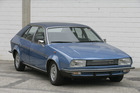
A car with many names: The Princess or Morris or Wolseley or Austin 18-22 is considered a prime example of unsuccessful product marketing. In 1975, mot magazine had the opportunity to test drive the car, which was later mocked as an "anteater" due to its curious shape.
This article contains the following chapters
- Comparison of figures
- Chassis details
- Room maintenance
- Overall verdict
- Technical data
Estimated reading time: 6min
Preview (beginning of the article)
The 1959 Mini was followed by the 1100 in 1962, which was joined by the 1800 in October 1964 and the Austin Maxi in spring 1969. From 1971, the 1800 was optionally available with the six-cylinder version of the Maxi engine: overhead camshaft and 2.2 liter displacement. This model never made it onto the German market, which was actually a shame. The same engines were available for the successor: Four-cylinder with five-bearing crankshaft and side camshaft, 1798 cc, 82 DIN hp at 5200 rpm or six-cylinder with seven-bearing crankshaft, overhead camshaft and 112 hp at 5250 rpm. The engines are positioned transversely in front of the front axle, the four-speed gearbox resides in the oil pan and shares its housing with the differential, which drives the front wheels via constant velocity joints. The results of extensive impact tests prompted the Austin designers to set the engine further away from the bulkhead and also to fit plenty of crumple plate in front of it.
Continue reading this article for free?
Images of this article